“It is something of a rite of passage,” we were told, “to jump into Antarctic waters if one is ever given the opportunity.” This piece of information, delivered by our skipper Roger Wallis to our motley crew of photographers, cinematographers and sound recordists aboard the Australis, had an aptly mixed reception. We had stopped at Skontorp Cove when this customary moment was thrust upon us.
My first thought as my body hit the icy water wasn’t the cold, but rather “oh my god, this is salt water.” After weeks being in Antarctica, my senses still couldn’t connect the dots. Growing up in the South Island of New Zealand, I was used to ice. Just not salty ice.
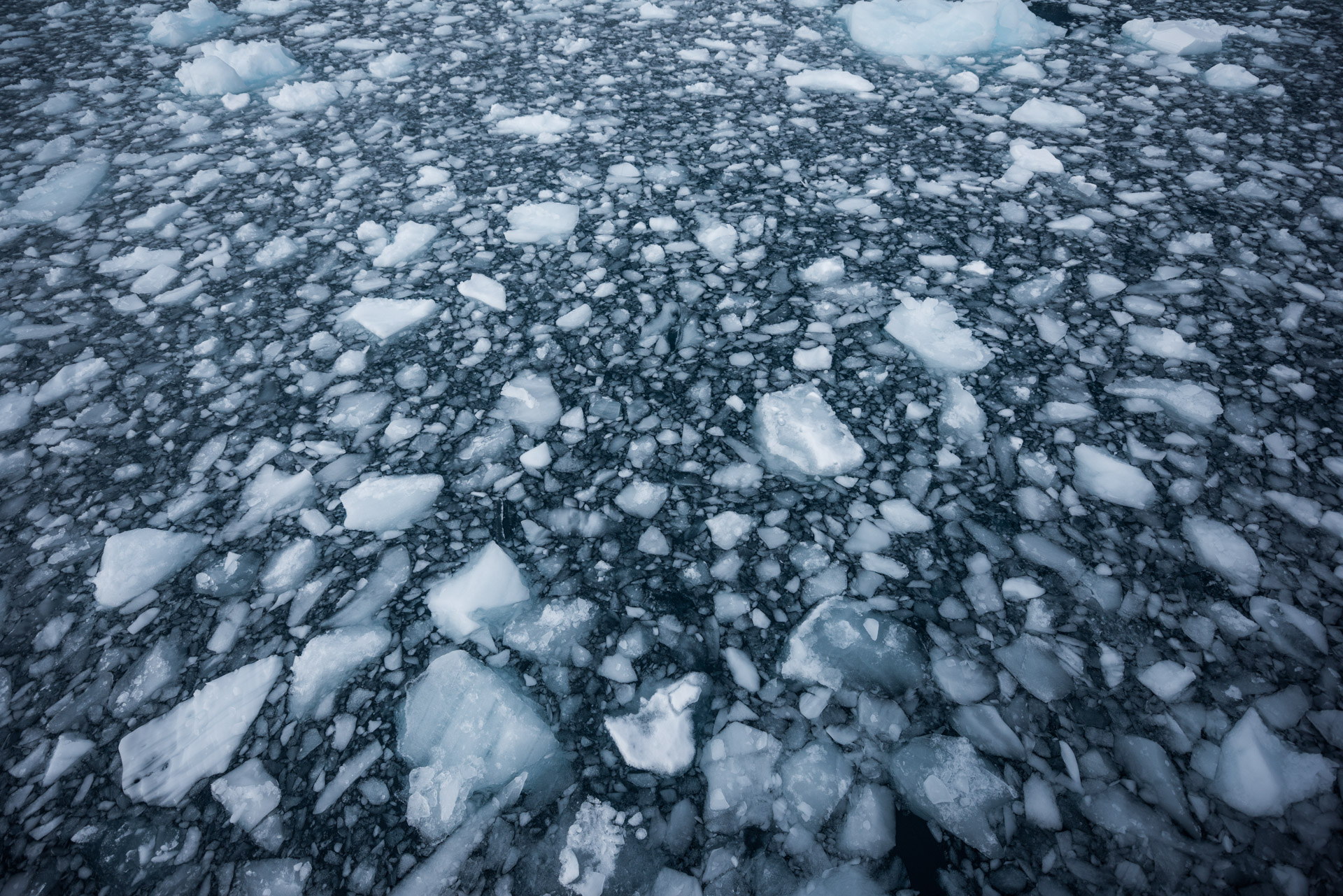
The physics of ice continued to dupe my senses, as what appeared to be bits of white fluff bobbed on the surface of the water. When they hit the side of the boat you’d realise they weren’t fluffy at all — they were heavy as rock and sharp as glass.
We were on a quest to document the different elements that make up this uninhabited, strange part of the planet, and find some of the most magnificent icebergs.
Roger was in touch with the skippers of other boats in the area and had told them about our project. One day, he got wind of an amazing iceberg one of the other skippers had just passed. With the coordinates plugged in, we set off in its direction, on the lookout for a 25 metre high structure. But as we approached the spot, it was nowhere to be seen. How could an iceberg the size of a building just disappear? As the Australis retraced its path through the field of ice, we saw it. It had tilted towards the landscape, halving its stature.
A few days later we went back, and Lincoln was gone.
Antarctica’s icebergs are always calving and shapeshifting. At one stage we saw an iceberg tip over on its side and begin spinning in the water, gathering motion as it splintered off into chunks under its own force. Ice would break off unexpectedly, precipitating mini tsunamis that would break against the hull of our boat.
We would wake up to a crystal blue bay of softly rippling water one morning, and be able to spot whales. The next, we’d awaken to find the boat surrounded by ice, the entire landscape filled with activity. Then, like a vacuum, the tide would take it all out again.
In this place of constant flux, nothing was as it seemed, and everything was temporary.
If you’d like to experience the audio of the characters and sounds of the icebergs, listen to our RNZ podcast Voice of the Iceberg.