Last month I had a great chat with Ian Harvey of Collective Intelligence for his podcast. Harv was curious to know about the seed that gave me the adventurer’s bug.
We arrived at the unlikely territory of my childhood, and I recalled the moment of upheaval that would come to fuel this passion of mine, and therefore my work.
My early years were spent in Kyeburn, which lies on the Maniototo, a wide, high plain settlement in Central Otago, New Zealand. We lived in a lifestyle property next to the river, spending all our time outdoors and playing until after dark. It felt like a limitless existence with no boundaries.
When I was five, Dad got a job in Dunedin. All of a sudden I was dropped into what felt like a cage or a box. There was concrete all around, and although we lived in a similar sized house as before, I wasn’t allowed outside. I developed asthma and started getting asthma attacks. It was a scary time, and the fear of not being able to breathe was magnified by a certain promised danger beyond our front door. I felt like nature, those wide open spaces, the riverbank, the summer evenings and their kingdom of wildlife — that universe had been traumatically taken away.
In my late teens, I went on an exchange to Hungary. This marked the beginning of a series of adventures to far-flung places. I would go on to spend six months traipsing through the frost-tipped tussock of Central Otago mountain ranges, building ice caves and sitting up all night capturing stars. Then 21 days in Antarctica, via Brazil where I met my wife and where my first child, Vincent, was born.
Growing up, I was haunted by a lost memory of wilderness, unbound spaces and closeness with nature. Of course, with the power of retrospect this now makes sense. I am constantly searching for that freedom I had in the house by the river in Kyeburn, and reclaiming the power that was taken away. Being hemmed in a city after spending my early years under a wide open sky was a painful experience, and the spiritual suffocation manifested itself in my body physically through my asthma. But, befitting of the hackneyed artistic plight, it is also an experience which continues to feed my practice to this day. My work has become a way of capturing this sense of spaciousness and closeness with the natural world.
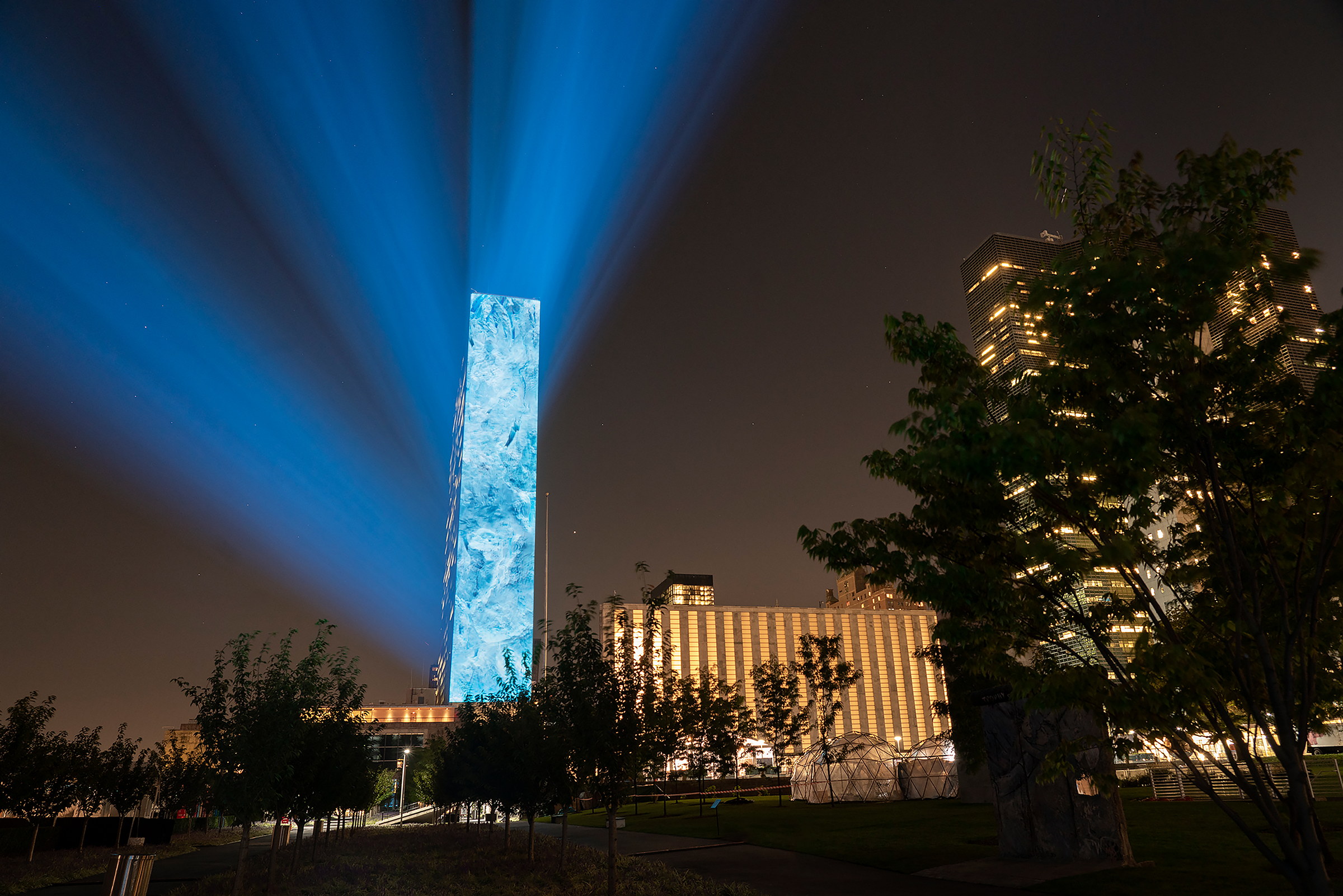
Raising my children now, I am conscious of the ways open and closed spaces affect their psyche, their sense of freedom, autonomy and inspiration. It is a difficult balance, and in a way it seems to me that an even crueller imposition on their freedom would be the contrast. Had I not known the open expanse to begin with, perhaps my city home wouldn’t have felt as much of a prison. My work is all about bringing the natural world into urban environments — perhaps as a way to reclaim power, but perhaps, more radically, as a way to enable inspiration to fill us wherever we are.