A few months ago I spent a week up in the country, away from the studio and the inbox, and one afternoon I sat at a kitchen table with my aunt and talked for about four hours. I can't tell you the exact shape of that conversation. It wandered through family, and death, and what you do with the years you get. At some point we were talking about the Amazon, and I drove home the next day absolutely lit up about making a book on the rainforest.
I got home and started it. That draft is still sitting on my desktop, unfinished.
What it did instead was light the fire for a book I had been circling for years, which is the one about the ice. So the conversation worked. It just didn't work on the thing I thought it was working on.
There is a particular moment that comes after having an idea, and it is the best moment there is. The idea is still perfect. It exists entirely inside your head, where there is no funding problem, no permission required, no logistics, no weather, no bureaucracy, no difficult collaborator, no equipment failure, and nobody asking whether it is commercially viable.
Then you decide to make it. That is when things get interesting.
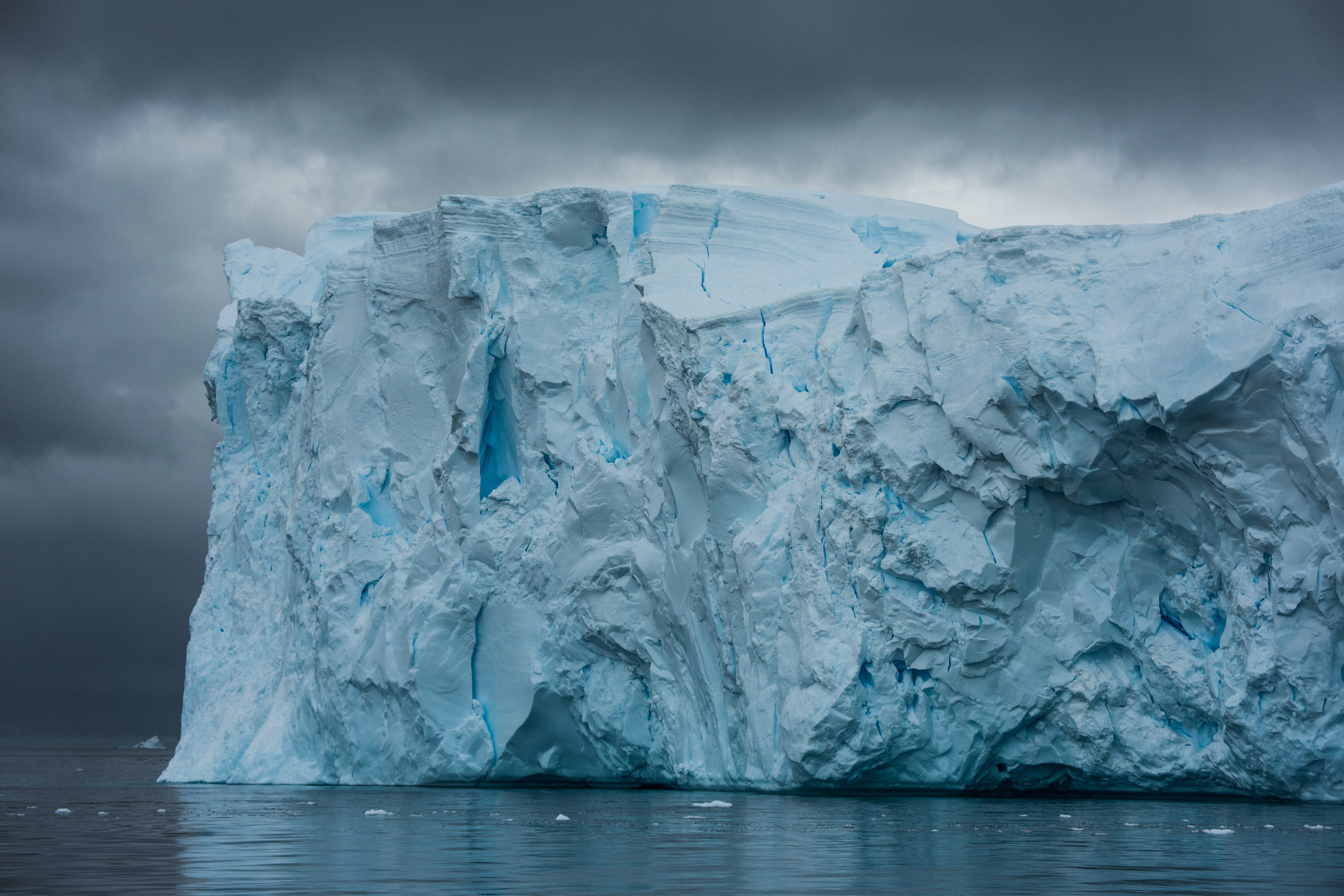
I have spent most of my working life trying to make things that would have been easier not to make. I have gone to Antarctica to listen to icebergs. I have stood in forests trying to understand what a dying tree might sound like. I have followed ideas into the Amazon that were plainly larger than I was. I have been to Tonga to work with whales, and spent years trying to turn an experience I can barely describe into something another person can stand inside. I painted a wall at the United Nations.
Almost none of it happened the way I first imagined it. That might be the most useful thing I know.
We celebrate the finished thing — the exhibition, the film, the book, the record — and we rarely talk about the wasteland of almosts sitting behind it. The emails that went unanswered. The applications that failed. The collaborator who disappeared. The institution that changed direction, or changed leadership, and with it changed its mind. The permit that became impossible. The money that ran out. The project that was suddenly too expensive, too complicated, too ambitious, or simply no longer convenient for the people who had agreed to help.
The last few years have had more of that in them than any other stretch of my life. Amazon — Raised Up Sky was funded in two stages, which got the team into the rainforest and the great trees scanned, but not all the way to the thing an audience can stand inside. The Sea Within was funded for its first phase, and the second phase, the one where it becomes an artwork, wasn't. Since the pandemic there is less money in the arts and more of us asking for it, and work that would once have found a home has sat waiting instead.
There was also the technology. For a while I believed the tree scans would live in augmented reality, that you would stand in a room and have a forest around you at full scale. I flew to San Francisco to meet a large technology company and pitched putting the forests in their stores. The meetings went well. Everyone was encouraging. Then the line went cold. Nobody said no. The emails just got slower and then they stopped, and that project quietly never happened.
When enough of that lands in a row, you start asking whether you should stop. Sometimes you probably should. But there is a better question underneath it, and I still don't have a clean answer to it: does the difficulty mean the idea is wrong, or does it just mean the idea is difficult?
What I do know is that making something real means giving up control. An idea starts as a private relationship between you and your imagination. Then other people get involved, and money, and institutions, and weather, and geography, and politics, and time, and the thing you imagined becomes something else. My Antarctic work began as an obsession with the sounds inside ice. The Amazon became an encounter with forests, people, science, mythology and loss. The whale work became something I could not have predicted on the first day. And when a project does land, there is no magical place you arrive at. There is just the next idea, and the next problem.
I used to think of the projects that never became what I intended as failures. I am suspicious of that now. Some of them have left me with more material, more knowledge, more relationships and more questions than the ones that worked. I have recordings nobody has heard. Conversations with scientists and artists that were never released. Photographs never exhibited. Stories that haven't found their form yet. Experiences I still don't quite know what to do with.
Perhaps the work isn't always the object you set out to make. Sometimes the work is what happens to you while you are trying to make it.
That is more or less where the book came from.
I had an archive: twenty days of recordings from the Peninsula, diaries, the ten icebergs we named after people we admired, two years of building a projection nobody had yet agreed to show, the museum, and then New York. None of it was going to become another artwork any time soon. So I started dictating it into my phone on drives. Not writing — talking. Once it was moving I couldn't stop it, and I would get out of the car with another chapter sitting in my pocket.
Then came the part nobody warns you about, which is that a pile of talking is not a book. Every memo had to be transcribed, cut apart and put back in order, and whole passages that felt wonderful to say turned out to be nothing at all on the page. It is now at its ninth draft: ten chapters, each named for one of the bergs — Ernest, Nelson, Ulysses, Jacques, Valentine, Lincoln — with the photographs running through it as plates. My wife Mariana has the whole manuscript in Brazilian Portuguese, which was its own strange pleasure, hearing the ice described in another language.
I have written applications, artist statements and funding reports for twenty years and none of it prepared me for how much I would like doing this. It is the first time I have made something where the sentences matter to me as much as the images. I read them out loud in the kitchen.
If everything lines up it goes to print next year, ten years after the projection first went up on the museum, and then I take it around New Zealand next winter and talk about it in the places that showed the work the first time. A body of work that stalled in one form has turned into another, and I would not have chosen it, and it might be the best thing I've made.
So why keep going at all? Why spend years on something that makes very little financial sense, travel across the world to record something most people will never hear, apply again after being turned down, rebuild a project after the original collapsed? I don't think it is ambition, or not mostly. I think an idea gets under your skin and you become responsible for it. Nobody asked you to be. It will not make you rich and it may not help your career. But you have seen or imagined something and you need to find out where it leads. There is an irrationality in that, and I suspect that is exactly where the creative life lives.
So the rule I have landed on isn't make the perfect thing, or the commercially sensible thing, or the thing everyone will understand. It is just: make the damn thing. Make the first version. Make the bad version. Make it before you know what it is. Change it when reality demands that you change it. And when you can't make the thing you imagined, look hard at what is left, because there is usually another work hiding in the residue — a recording, a story, a book, a conversation, something you could not have planned because you hadn't failed yet.
If you want to know when the book is ready, put your email in the box below. I'll send one note when it is printed, and the people on that list get first chance at the first edition.